Green Certificate vs Property File: What’s the Real Difference?
Confused about whether you need a Property File, a Green Certificate, or both? Here’s a clear, side-by-side explanation of what each document proves and why they serve completely different purposes.
By the Green Property Certificate Editorial Team · Last updated 2026 · 10 min read
If you’re buying property, running a commercial building, or applying for regulatory approval in Punjab, you’ve probably come across both terms — Property File and Green Certificate — and wondered if they’re the same thing. They are not, and mixing them up can cause real delays in property transactions or business licensing.
This guide breaks down exactly what each document is, who issues it, who needs it, and how they work together rather than replacing one another. We’ll also show you where to start your application through Green Property Certificate.
What Is a Property File?
A Property File (sometimes called a property registry file or ownership file) is the official legal record maintained by a land authority — such as the Board of Revenue, a Development Authority, or a Housing Society — that documents:
- The legal owner of the property
- Transfer history and chain of ownership
- Plot size, boundaries, and location details
- Mutation (Intiqal) records
- Any liens, mortgages, or legal disputes attached to the property
In short, a Property File answers one question: who legally owns this property, and is the title clean? It’s the foundation document for buying, selling, mortgaging, or inheriting real estate in Pakistan.
What Is a Green Certificate?
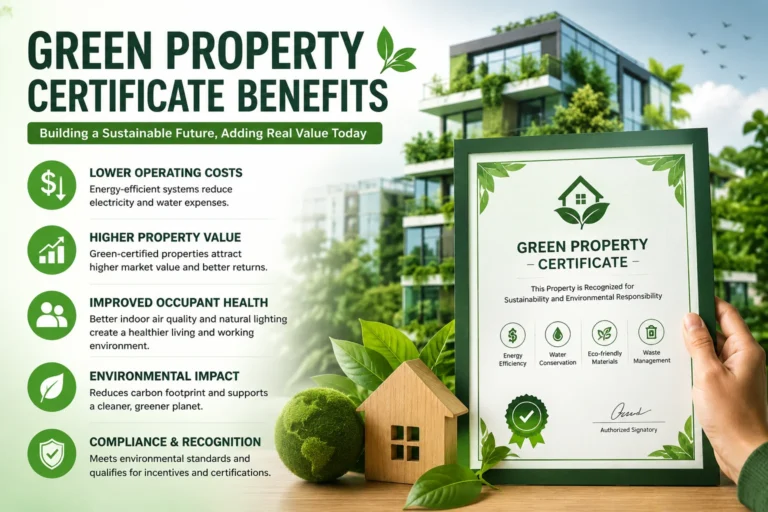
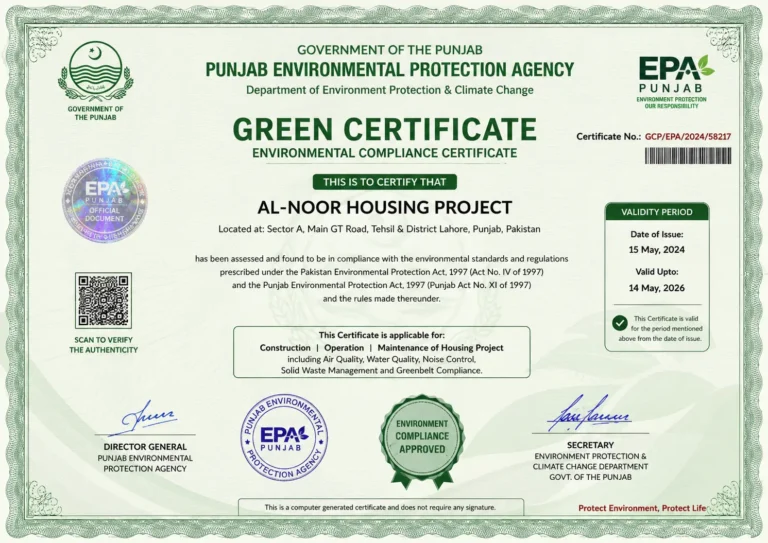
A Green Certificate is an entirely different kind of document. It’s an environmental compliance certification issued by provincial environmental authorities — most notably the Punjab Environmental Protection Department (EPD) — confirming that a property, building, or business operation meets defined environmental standards. These standards typically cover:
- Energy efficiency of the building or facility
- Waste disposal and recycling practices
- Water usage and conservation measures
- Air and noise pollution control
- Use of renewable or low-emission energy sources
A Green Certificate answers a completely different question: is this property or business operating in an environmentally responsible way? It has nothing to do with who owns the land — it’s about how the property functions and impacts the environment around it.
Green Certificate vs Property File: Side-by-Side Comparison
| Feature | Property File | Green Certificate |
|---|---|---|
| Purpose | Proves legal ownership and title | Proves environmental compliance |
| Issuing Authority | Board of Revenue / Development Authority / Housing Society | Punjab Environmental Protection Department (EPD) |
| Required For | Buying, selling, mortgaging, or inheriting property | Business licensing, commercial operations, regulatory compliance |
| Renewal | Updated only on transfer or mutation | Typically renewed periodically (often annually) |
| Focus Area | Legal ownership, boundaries, transaction history | Energy use, waste management, pollution control |
| Who Needs It | Every property owner or buyer | Commercial, industrial, and certain residential developments |
Why the Confusion Happens
Many property owners assume that because both documents relate to “property,” they must be interchangeable or that one replaces the other. In reality, a property can have a completely clean, verified Property File and still fail to meet Green Certificate standards if the building lacks proper waste management or energy-efficient systems. Conversely, a business could be fully compliant environmentally while its underlying property ownership documents are incomplete or disputed. These are two independent tracks of compliance.
Do You Need Both Documents?
Whether you need one or both depends on the type of property and its use:
- Residential property buyers/sellers: A verified Property File is essential. A Green Certificate is generally not mandatory for private residential resale, though it can add value.
- Commercial property owners: Both are typically required — the Property File for legal transaction purposes, and the Green Certificate for operating licenses and regulatory approval.
- Industrial units and factories: A Green Certificate is often mandatory under environmental law, in addition to standard property and business registration documents.
- New commercial developments: Increasingly, Development Authorities in Punjab are linking building completion certificates to environmental compliance, making a Green Certificate a practical necessity even if not strictly mandatory yet.
To understand the exact requirements for your property type, see the full Green Certificate Requirements guide.
How to Apply for a Green Certificate in Punjab
The Green Certificate application process is separate from any property registration process and generally follows these steps:
- Conduct an internal energy and environmental audit of the property or facility.
- Gather supporting documents — utility bills, waste management contracts, and equipment specifications.
- Submit an application to the Punjab Environmental Protection Department or its authorized portal.
- Undergo a site inspection or assessment by EPD-certified evaluators.
- Receive the certificate upon meeting the required compliance thresholds, or a list of corrective actions if you don’t yet qualify.
For a complete step-by-step walkthrough, read our How to Apply for a Green Certificate guide.
How to Verify or Update a Property File
Property File verification is handled separately through your local Land Record Authority, Development Authority, or Housing Society office — not through the EPD. Typically, this involves confirming mutation records, checking for any pending disputes, and ensuring the title is registered under the correct current owner’s name. Property lawyers and registered real estate agents can assist with this process, and it’s a standard part of due diligence before any real estate transaction.
Why Both Matter for Property Value and Legal Safety
A clean Property File protects you legally — it confirms you actually own what you’re paying for, free of disputes. A Green Certificate increasingly protects you commercially — many businesses, especially those seeking government contracts, bank financing, or corporate tenants, are now expected to demonstrate environmental compliance. Properties holding both documents are generally viewed as lower-risk and higher-value in Punjab’s evolving real estate and commercial leasing market.
🌿 Key Takeaways
- A Property File proves legal ownership; a Green Certificate proves environmental compliance — they are not substitutes for each other.
- Property Files are issued by land authorities; Green Certificates are issued by the Punjab Environmental Protection Department.
- Commercial and industrial properties in Punjab increasingly need both documents for full legal and regulatory standing.
- A Green Certificate typically requires renewal, while a Property File only changes on ownership transfer.
- Confusing the two can delay property transactions or business licensing approvals.
- You can start your Green Certificate application through Green Property Certificate.
Frequently Asked Questions
Is a Green Certificate the same as a Property File?
No. A Property File proves legal ownership of land or a building, while a Green Certificate proves environmental compliance. They are issued by different authorities for entirely different purposes.
Do I need a Green Certificate to sell my house?
Generally no, for private residential resale. A verified Property File is what’s required. A Green Certificate becomes relevant mainly for commercial or industrial properties.
Who issues the Green Certificate in Punjab?
The Punjab Environmental Protection Department (EPD) issues Green Certificates after reviewing a property’s energy use, waste management, and pollution control practices.
Can a property have a clean Property File but fail Green Certificate standards?
Yes. Ownership status and environmental compliance are evaluated independently, so a property can be legally clean but still fall short of environmental requirements.
Does a Green Certificate expire?
Yes, Green Certificates are typically issued for a fixed period and require periodic renewal, unlike a Property File which remains valid until ownership changes.
Where can I apply for a Green Certificate?
You can review requirements and start your application through the Green Certificate application guide.
Not Sure Which Document You Need?
Check your property type’s exact Green Certificate requirements and start your application today.
🌿 Check Green Certificate Requirements