Green Certificate Registration Form: How to Apply the Right Way (2026)
A complete, step-by-step breakdown of the green certificate registration form — what it asks for, what documents you need, and how to avoid the mistakes that cause rejections.
What Is a Green Certificate?
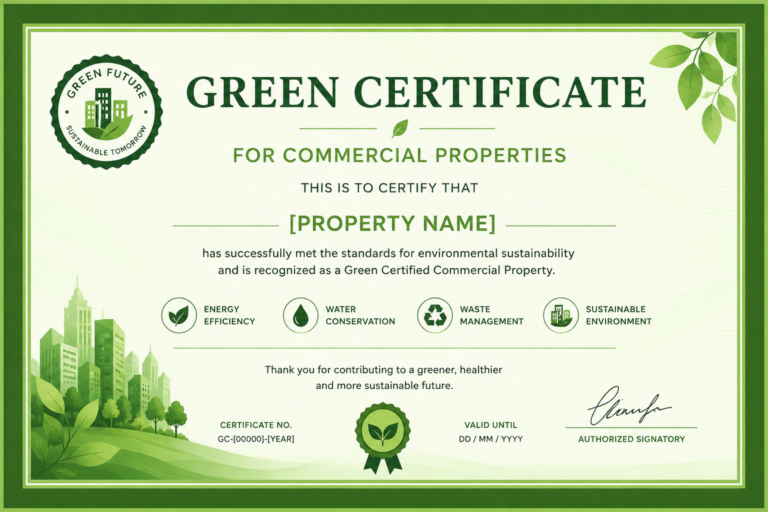
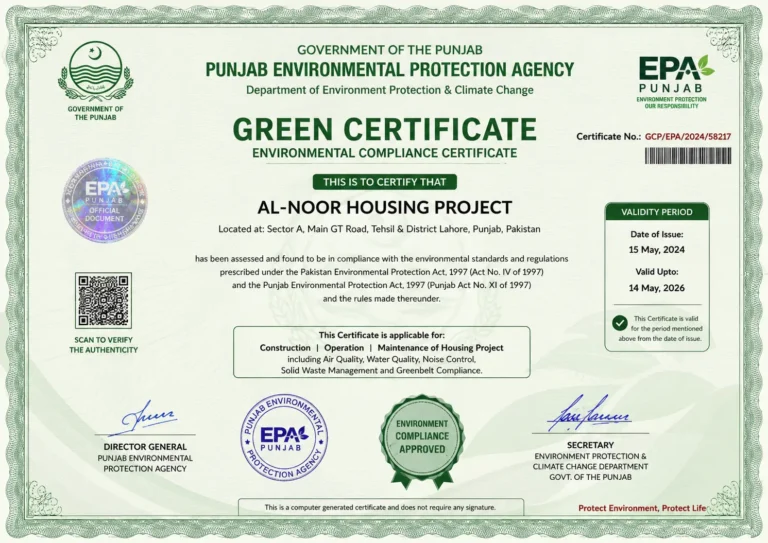
A green certificate is an official document that proves a business, factory, or property meets recognized environmental or sustainability standards. It’s issued by a regulatory body after reviewing your application, checking your documents, and — in most cases — physically inspecting your premises.
In Punjab, Pakistan, this certification falls under the Punjab Environmental Protection Department (PEPD), which regulates industries ranging from textile mills and cement plants to real estate developers and waste management facilities. The certificate confirms that your operations follow emission limits, waste-handling rules, and pollution-control requirements set out in current environmental law.
Filling out the green certificate registration form correctly is the very first step in this entire process — and it’s also where most delays and rejections happen.
Who Needs to Fill This Form
Not every business is legally required to register, but a wide range of sectors are covered under the 2026 environmental rules. You likely need to submit the green certificate registration form if you operate in:
- Manufacturing (textile, chemical, cement, steel, food processing)
- Energy (power plants, renewable energy installations, oil & gas)
- Mining and quarrying operations
- Large-scale agriculture, dairy, or poultry farms
- Construction and real estate development
- Waste management and recycling facilities
- Transport and logistics fleets
What the Green Certificate Registration Form Asks For
While exact fields vary slightly by region, most green certificate registration forms — including Form GC-2026-P — request the following information:
| Section | What You Need to Provide |
|---|---|
| Business Details | Legal name, registration number, trade license, business address |
| Ownership Information | Owner/director CNIC, authorized representative details |
| Operational Details | Type of industry, production capacity, number of employees |
| Environmental Data | Emission sources, waste output, water usage, pollution-control systems installed |
| Supporting Reports | Environmental Impact Assessment (EIA), utility bills (last 12 months) |
| Declaration & Signature | Authorized signatory confirmation and application fee proof |
Required Documents Checklist
- Completed application form (e.g., Form GC-2026-P)
- Business registration certificate and valid trade license
- Environmental Impact Assessment (EIA) report from a certified consultant
- Proof of installed pollution-control equipment (invoices, installation certificates)
- Utility bills for the last 12 months
- Facility photographs (pollution control systems, storage, general operations)
- Staff environmental training records, if applicable
- ISO certifications, if already held
How to Fill the Green Certificate Registration Form: Step-by-Step
- Confirm eligibility. Check whether your business sector falls under mandatory green certification rules.
- Prepare documentation first. Spend 2–4 weeks gathering business registration papers, EIA reports, and utility bills before touching the form. Rushing this stage causes the majority of rejections.
- Hire a certified environmental consultant if you don’t already have one — the EIA report must be professionally prepared.
- Access the online portal. Most registration forms, including Punjab’s, are submitted through the relevant department’s official website.
- Fill in business and operational details accurately — mismatched information between your form and your documents is a common red flag during review.
- Upload all supporting documents in the correct format (usually PDF or JPEG, depending on the portal).
- Pay the application fee through the accepted payment method shown on the portal.
- Submit and track your application using the reference number provided after submission.
- Prepare for site inspection. Once your form is approved on paper, officials will visit your facility to confirm everything matches your application.
Fees & Processing Time
Processing timelines vary by department and workload, but a well-prepared application typically moves through these stages:
| Stage | Typical Duration |
|---|---|
| Document preparation | 2–4 weeks |
| Application review | Within 24 hours (online) to a few days |
| Site inspection | 1 day |
| Lab testing (if required) | 7–14 days |
| Certificate issuance | 3–5 days after approval |
Most businesses that follow the process correctly complete registration within 3–5 weeks from start to finish. Application fees vary depending on business size and category, so it’s best to confirm the exact fee on the official portal before submitting.
Common Mistakes That Cause Rejection
Based on patterns reported by applicants, these are the most frequent reasons a green certificate registration form gets sent back or rejected:
- Submitting the form before pollution-control equipment is fully installed and tested
- Incomplete or mismatched business registration details
- Skipping the Environmental Impact Assessment or using an unqualified consultant
- Missing signatures or incorrect dates on supporting documents
- Photos or records that don’t match the actual site conditions during inspection
Green Certificate vs Green Property Certificate — What’s the Difference?
These two terms sound similar but serve different purposes, and it’s easy to confuse them when searching online:
| Aspect | Green Certificate (Environmental) | Green Property Certificate (Land Record) |
|---|---|---|
| Issued by | Environmental Protection Department (e.g., PEPD) | Land Records Authority (e.g., PLRA) |
| Purpose | Confirms environmental/pollution compliance | Confirms verified land ownership and legal registration |
| Applies to | Factories, industries, large agricultural/commercial operations | Residential, commercial, industrial, and agricultural land parcels |
| Registration form focus | Business & environmental data, EIA report | Ownership details, property records verification |
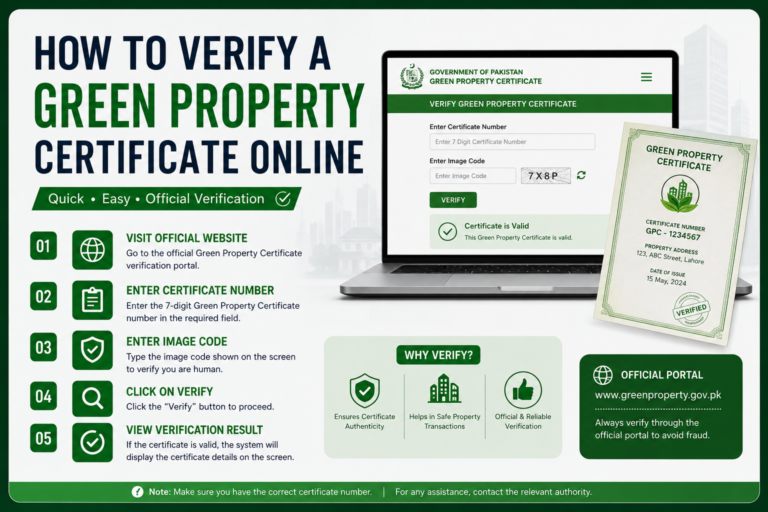
If your goal is environmental compliance for your business operations, you need the environmental green certificate form. If you’re verifying land ownership authenticity, that’s a separate green property certificate process handled by land record authorities.
Key Takeaways
- The green certificate registration form collects business, ownership, and environmental compliance data before certification is granted.
- Preparation — not the form itself — determines most of your approval chances; gather documents 2–4 weeks in advance.
- You’ll need business registration papers, an EIA report, pollution-control proof, and 12 months of utility bills.
- Most complete applications are processed within 3–5 weeks, including site inspection.
- Don’t confuse an environmental green certificate with a green property (land record) certificate — they serve different purposes.
Frequently Asked Questions
What is the green certificate registration form used for?
It’s the official application used to request environmental compliance certification for a business, confirming that operations meet pollution-control and sustainability standards set by the regulating authority.
What documents are required with the registration form?
You typically need a business registration certificate, trade license, Environmental Impact Assessment report, pollution-control equipment proof, and 12 months of utility bills.
How long does green certificate registration take?
Most well-prepared applications are completed within 3–5 weeks, covering document review, site inspection, and certificate issuance.
Can I submit the green certificate registration form online?
Yes. Most environmental departments, including Punjab’s PEPD, offer an online portal where you can complete and submit the form along with digital copies of required documents.
Why do green certificate applications get rejected?
The most common reasons are incomplete documentation, missing or non-functional pollution-control equipment, and mismatched details between the form and supporting records.
Want a Complete Walkthrough of the Application Process?
Read our full step-by-step guide on how to apply for a green certificate and avoid common rejection triggers.
Visit Green Property Certificate →