Why Every Property Buyer Should Verify a Property Before Buying
Buying a property is one of the biggest financial decisions you’ll ever make. Whether you’re purchasing your first home, an investment apartment, a commercial office, or a plot of land, verifying the property before making payment is essential. Property verification protects buyers from fraud, legal disputes, hidden liabilities, and financial losses.
Many buyers focus only on the property’s location and price while ignoring legal checks. However, a few hours spent verifying documents can save years of legal problems. In this guide, you’ll learn why property verification is important, what documents to check, and how to ensure your investment is safe.
What Is Property Verification?
Property verification is the process of confirming that a property is legally valid, free from disputes, and owned by the person selling it. It involves checking ownership documents, government approvals, land records, payment history, and any outstanding liabilities before completing the purchase.
The goal is to ensure that the buyer receives a property with a clear and legal title.
Why Property Verification Is Important
Property fraud is one of the most common real estate issues worldwide. Buyers who skip verification risk purchasing properties with legal complications, unpaid dues, or fake ownership documents.
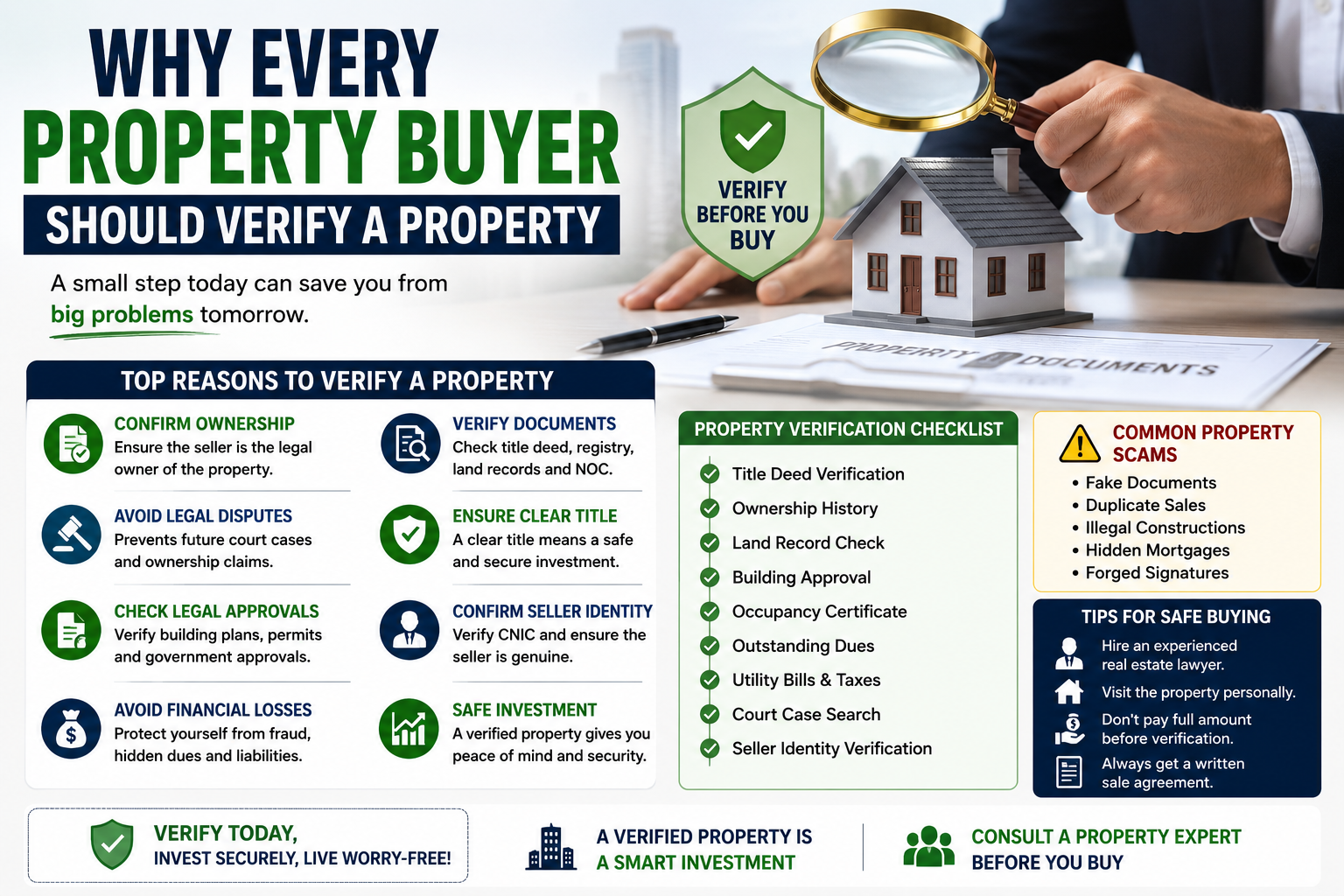
Proper verification helps you:
- Confirm genuine ownership.
- Avoid fraudulent sellers.
- Check legal approvals.
- Prevent future disputes.
- Secure your investment.
- Speed up the transfer process.
Top Reasons Every Buyer Should Verify a Property
1. Confirm Ownership
Always verify that the seller is the legal owner of the property. The name on the title deed should match the seller’s identification documents.
2. Check the Title Deed
A clear title proves ownership and confirms that the seller has the legal right to transfer the property.
Review the title deed carefully for:
- Owner’s name
- Property details
- Plot number
- Registration information
3. Verify Government Approvals
Ensure the property has all required approvals from the relevant development authority or municipality.
These approvals may include:
- Building approval
- Layout approval
- Completion certificate
- Occupancy certificate
4. Check for Outstanding Dues
Before purchasing, verify whether the property has:
- Unpaid utility bills
- Service charges
- Property taxes
- Maintenance fees
- Bank loans or mortgages
Outstanding liabilities can become the buyer’s responsibility after transfer.
5. Ensure the Property Is Free From Legal Disputes
Ask whether the property is involved in:
- Court cases
- Ownership disputes
- Family inheritance claims
- Encroachments
Buying disputed property can result in lengthy legal proceedings.
6. Verify Land Records
Cross-check the property’s details with official land records to ensure accuracy.
Verify:
- Plot dimensions
- Survey number
- Registration details
- Ownership history
7. Confirm the Seller’s Identity
Request official identification documents from the seller.
If purchasing through an agent, confirm that they have legal authorization to represent the owner.
8. Check the Developer’s Reputation
If buying an off-plan property, research the developer’s:
- Previous projects
- Delivery history
- Customer reviews
- Financial stability
A trusted developer reduces investment risk.
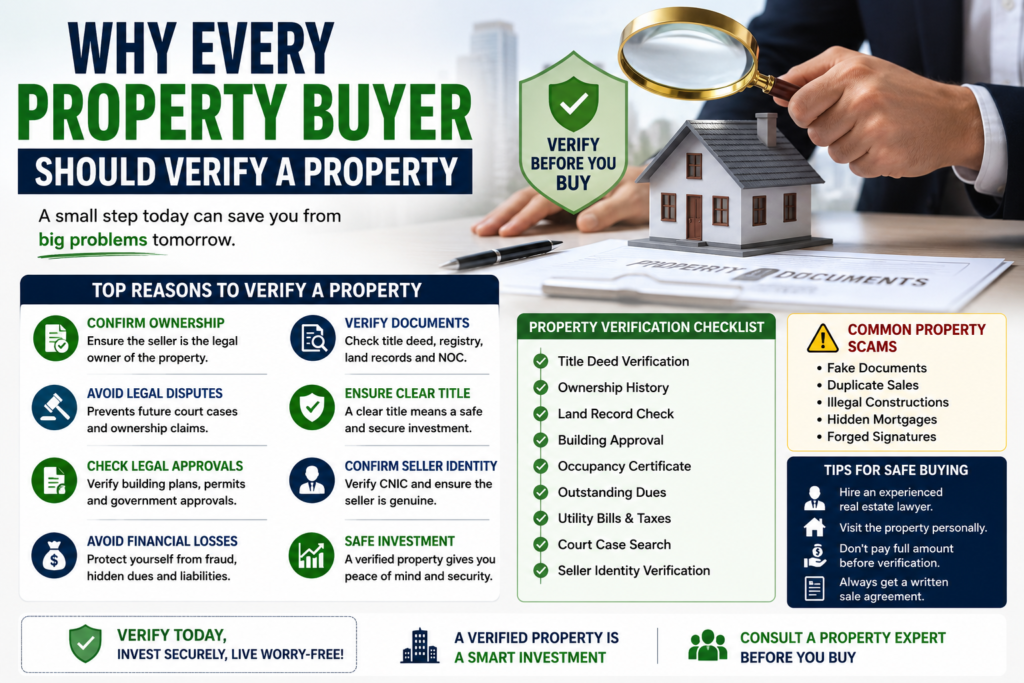
Property Verification Checklist
| Verification Step | Why It Matters |
|---|---|
| Ownership Check | Confirms legal owner |
| Title Deed | Verifies ownership rights |
| Government Approval | Ensures legal construction |
| Land Records | Confirms property details |
| Outstanding Dues | Prevents hidden liabilities |
| Utility Bills | Confirms payment status |
| Property Taxes | Avoids unpaid tax issues |
| Developer Background | Reduces investment risk |
Common Property Scams
Buyers should watch for:
- Fake ownership documents
- Duplicate property sales
- Forged signatures
- Illegal developments
- Hidden mortgages
- Unapproved projects
Always verify documents before making any payment.
Tips for Safe Property Buying
- Hire an experienced real estate lawyer.
- Buy through a trusted real estate agency.
- Verify all original documents.
- Visit the property personally.
- Confirm government approvals.
- Never rely only on verbal promises.
- Keep copies of every document.
Key Takeaways
- Property verification protects buyers from fraud and financial loss.
- Always confirm ownership before paying.
- Check legal documents carefully.
- Verify government approvals and outstanding dues.
- Work with trusted real estate professionals for a secure transaction.
Frequently Asked Questions
Why should I verify a property before buying?
Verification confirms legal ownership and protects you from fraud, disputes, and hidden liabilities.
What documents should I check?
Title deed, ownership records, government approvals, utility bills, tax receipts, and payment history.
Can I verify property documents online?
Many government authorities provide online property verification services, depending on your country or region.
Should I hire a lawyer?
Yes. A qualified property lawyer can identify legal risks and verify all documents before purchase.
Conclusion
Property verification is not just a legal formality—it’s a crucial step in protecting your investment. Taking the time to verify ownership, legal approvals, payment records, and property documents can save you from costly mistakes and future disputes.
Whether you’re buying your first home or investing in commercial real estate, always complete a thorough property verification process before signing any agreement or making a payment. A verified property provides peace of mind and ensures your investment remains secure for years to come.